
If you’ve noticed your website traffic behaving strangely lately, you’re not imagining things. The way people search is changing fast, and AI Visibility Tools are quickly becoming the must-have addition to every marketer’s stack. Instead of scrolling through ten blue links, your customers are now asking ChatGPT, Perplexity, and Google AI Overviews for answers and those AI engines decide which brands to mention. If your brand doesn’t appear in AI answers, you’re invisible to a growing chunk of your audience. That’s exactly why the best AI visibility tools exist: to help you track, measure, and improve how your brand shows up across AI search.
In this guide, we’ll break down the 20 best AI visibility tools, compare them side by side, and show you how to pick the right one for your team. Let’s dive in.
Table of Contents
ToggleWhat Are AI Visibility Tools?
AI visibility tools are software platforms that track, measure and evaluate the frequency and positivity of your brand’s mentions in AI-generated responses across AI search engines such as ChatGPT, Google AI Mode, Gemini and Perplexity. They provide you with a visibility score, track mentions of AI, and show you if AI models are citing you or your competitors.
Think of them as your radar for the new AI search landscape. Traditional SEO tools track keyword rankings on Google’s results pages. AI visibility tools track something newer and trickier: whether your brand appears in AI responses when someone asks a question.
Because AI answers pull from many sources and rarely show a simple ranking, you need specialized AI visibility monitoring to understand your AI presence.
AI Visibility vs. Traditional SEO
Traditional SEO tools like Semrush (in its classic form) tell you where you rank for a keyword. AI visibility tracking tells you whether an AI model actually mentions your brand in its generated answer. The difference matters because AI search doesn’t work like a ranked list, it works like a conversation. You can rank #1 on Google and still be completely absent from an AI answer covering the same topic.
How AEO and GEO Differ
You’ll see two acronyms thrown around a lot: AEO (Answer Engine Optimization) and GEO (Generative Engine Optimization). AEO focuses on optimizing your content so it becomes the direct answer AI engines serve. GEO is broader; it’s about optimizing your entire digital presence so generative AI systems understand, trust, and cite your brand. Most modern AI visibility tools support both, giving you a complete AI search optimization toolkit.
Why Should You Track AI Brand Visibility?
Here’s the truth: AI search isn’t a “someday” trend; it’s already here, and it’s eating into your organic traffic. Google AI Overviews now appear on a huge share of searches, and platforms like ChatGPT and Perplexity are becoming default research tools for millions of people. If you’re not tracking AI visibility, you’re flying blind in the exact channel where buying decisions are increasingly made. Let’s answer the big question head-on: why should you track AI brand visibility?
- AI is where discovery happens now. When a prospect asks an AI engine “what’s the best CRM for small teams?”, the answer either includes your brand or it doesn’t. Tracking tools show you the reality.
- You can’t improve what you don’t measure. AI visibility data reveals which prompts, topics, and competitors dominate AI answers so you can act.
- Your competitors are already doing it. AI competitor research is one of the biggest hidden advantages of these platforms. You get to see who’s winning the AI mention game.
- Traffic from AI is different but valuable. Users arriving via AI citations are often further down the funnel they’ve already gotten context and trust from the AI. That’s high-intent traffic.
- Reputation management. Monitor not just whether your brand appears in AI, but how it’s described. AI responses shape perception.
In short, tracking AI visibility across major AI platforms is no longer optional for SEO marketers, agencies, and B2B teams. It’s the foundation of staying discoverable in the age of AI search.
20 Best AI Visibility Tools
Quick Comparison Table
HubSpot AEO Grader
HubSpot’s AEO Grader is the perfect entry point if you’re just dipping your toes into AI search optimization. It’s a free tool that scores how well your brand appears in AI answers and gives you a clear AEO grade.
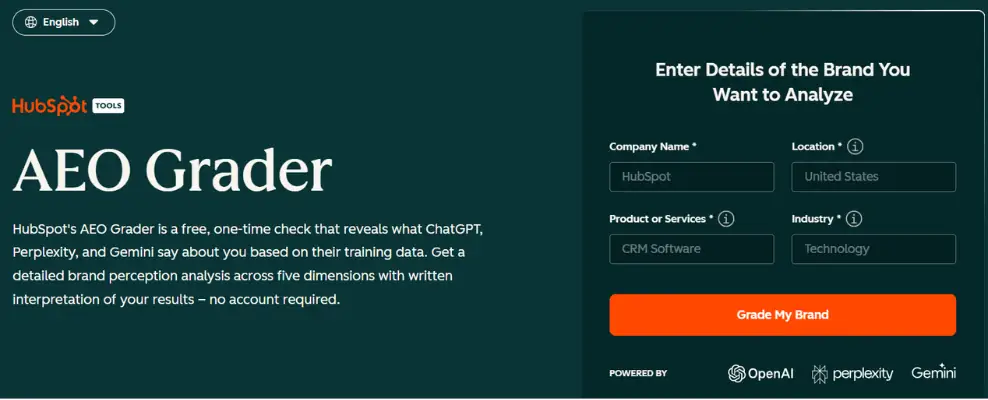
Key Features: Instant AEO scoring, actionable recommendations, brand visibility snapshot across major AI platforms.
Pros: Completely free, beginner-friendly, backed by HubSpot’s authority.
Cons: Less granular than dedicated AI visibility tracking tools.
Pricing: Free.
Best For: Marketers wanting a quick, no-cost way to check their AI presence.
SE Ranking AI Visibility Tracker
SE Ranking’s AI Visibility Tracker blends classic SEO with AI search tracking in one platform. If you already love all-in-one SEO tools, this feels like a natural upgrade.
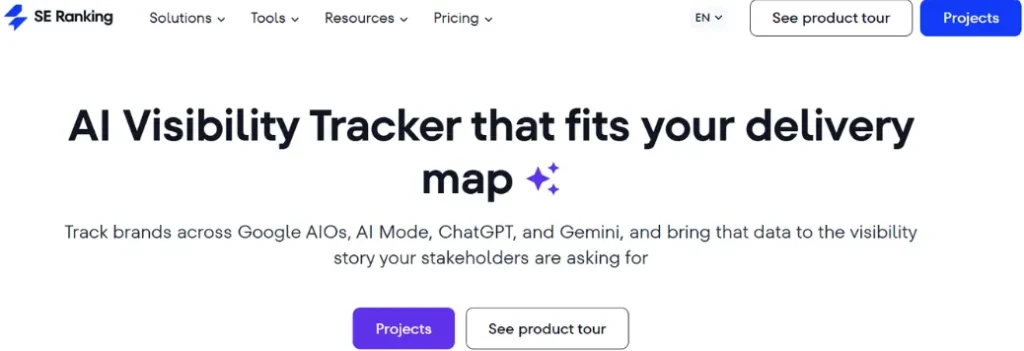
Key Features: Track AI visibility across ChatGPT, Gemini, and Google AI Overviews, plus traditional rank tracking.
Pros: Unified dashboard, strong reporting, great value.
Cons: AI features are newer than its SEO core.
Pricing: Starts at $129/month; 14-day free trial available, no free plan.
Best For: Teams wanting AI and traditional SEO in one place.
Seobility GEO Tool
The Seobility Generative Engine Optimization Tool is built specifically for GEO. It functions as a content optimization tool to help your pages get cited by AI.
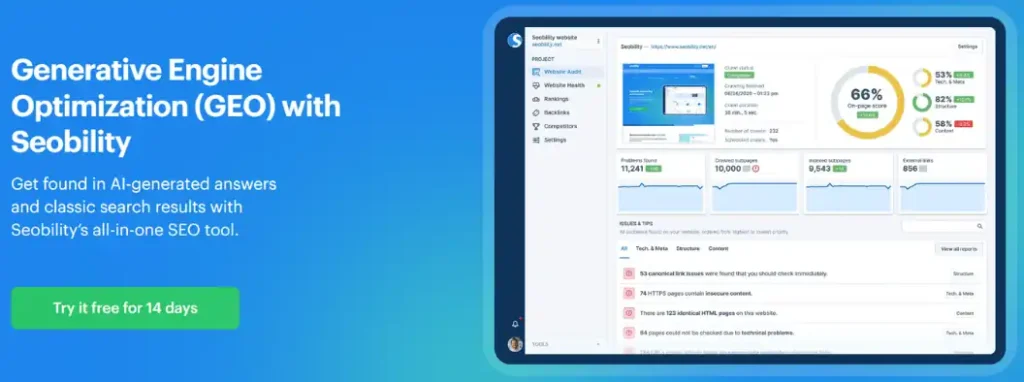
Key Features: GEO content analysis, optimization suggestions, AI readiness scoring.
Pros: Laser-focused on GEO, affordable, easy to use.
Cons: Narrower scope than full visibility platforms.
Pricing: Free plan available; premium plan starts at $50/month with a 14-day free trial.
Best For: Content teams optimizing directly for generative engines.
Brand24 AI Visibility
Brand24’s AI Visibility feature brings its reputation-monitoring DNA to AI search. It tells you not just whether your brand appears in AI answers, but how it’s described.
Key Features: AI mention tracking, sentiment analysis, real-time alerts.
Pros: Excellent for reputation and PR, strong sentiment insights.
Cons: Less focused on ranking/visibility scores.
Pricing: Starts at $249/month; 14-day free trial available, no free plan.
Best For: Brands prioritizing reputation across AI platforms.
AirOps
AirOps is a powerhouse for teams building AI content workflows at scale. It’s less a simple tracker and more a full AI content and visibility engine.
Key Features: AI content generation, GEO workflows, visibility insights.
Pros: Highly scalable, great for large content operations.
Cons: Steeper learning curve; better for advanced teams.
Pricing: Custom, with a free trial.
Best For: Content-heavy teams and agencies.
Searchable
Searchable focuses on giving you clear AI search visibility tracking across multiple AI engines in a clean interface.
Key Features: Multi-engine AI search monitoring, competitor tracking, visibility trends.
Pros: Intuitive UI, solid engine coverage.
Cons: Newer player, smaller feature set.
Pricing: Starts at $125/month; 14-day free trial available, no free plan.
Best For: Teams wanting straightforward AI search visibility tracking.
Morningscore
Morningscore makes SEO and AI visibility genuinely fun with a gamified approach. It’s a favorite among SMBs and freelancers.
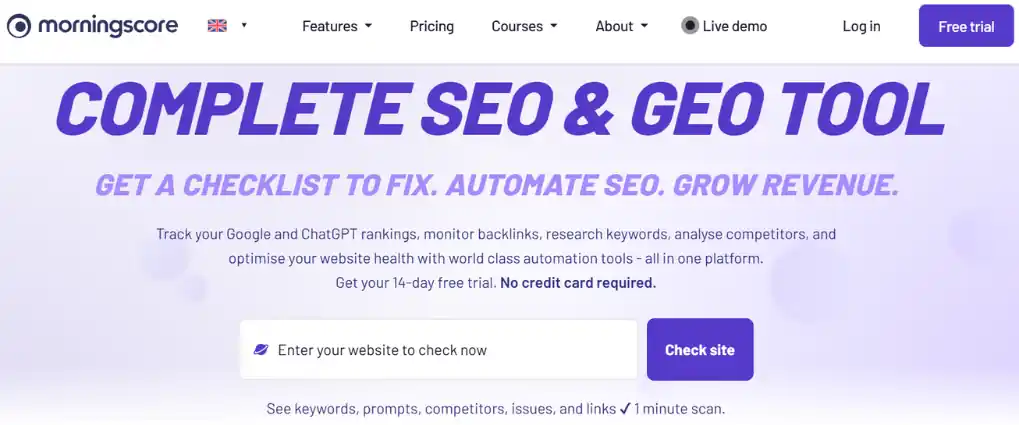
Key Features: Gamified dashboards, AI visibility tracking, keyword and mission tracking.
Pros: Beginner-friendly, motivating, affordable.
Cons: Less enterprise-grade depth.
Pricing: Starts at $69/month; 14-day free trial available, no free plan.
Best For: Small businesses and solo marketers.
Rankscale
Rankscale specializes in LLM visibility; showing you exactly how you stack up in AI model answers.
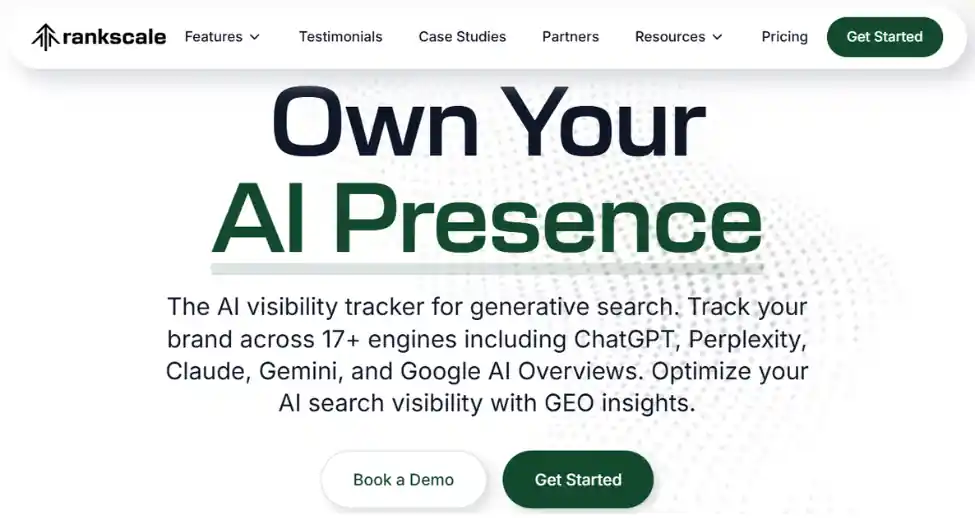
Key Features: LLM visibility analysis, AI ranking data, competitor benchmarking.
Pros: Deep AI-first focus, strong analytics.
Cons: Requires some AI SEO knowledge to maximize.
Pricing: Starts at $99/month; 7-day free trial available, no free plan.
Best For: Data-driven SEO teams focused on LLM visibility.
AIClicks
AIClicks is all about tracking how your brand performs across specific AI prompts and AI responses.
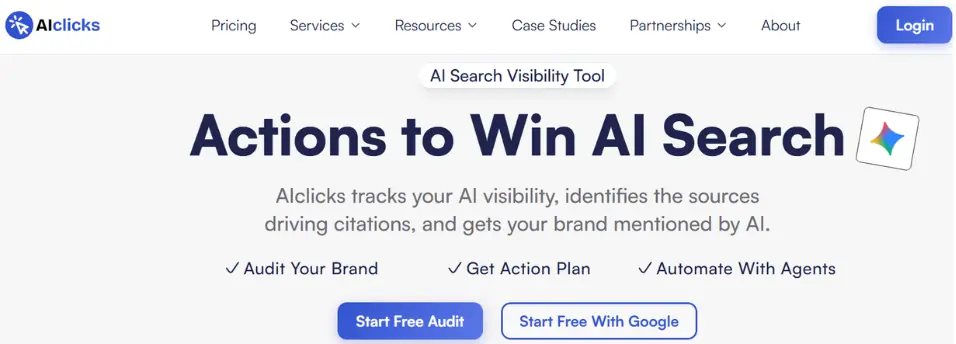
Key Features: Prompt-level AI answer monitoring, visibility scoring, alerts.
Pros: Granular prompt tracking, actionable data.
Cons: Interface still maturing.
Pricing: Starts at $59/month; 3-day free trial available, no free plan.
Best For: Marketers who want prompt-level visibility insights.
Nightwatch
Nightwatch is a robust rank tracking platform that has expanded into serious AI visibility monitoring for enterprises.
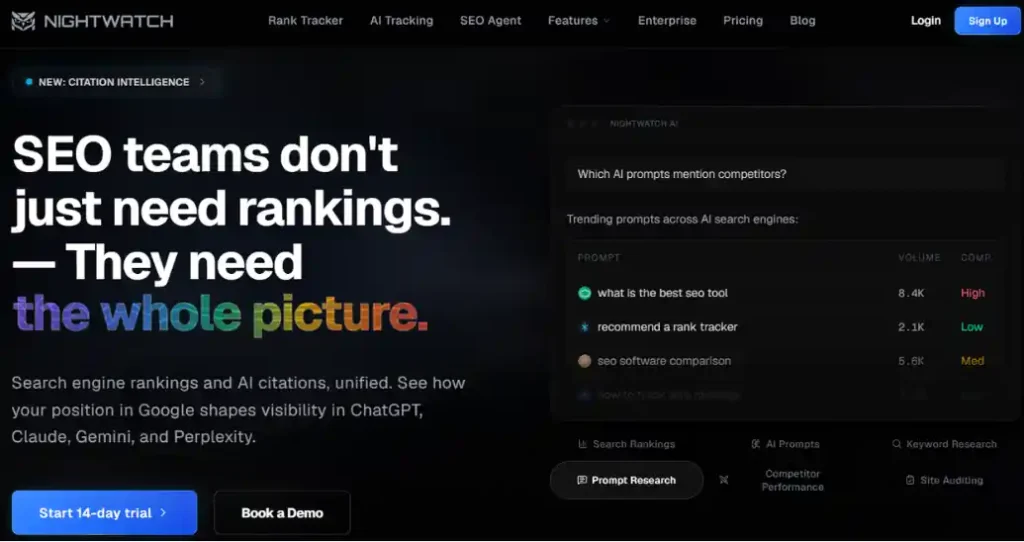
Key Features: Deep visibility tracking, global/local coverage, AI search tracking.
Pros: Enterprise-grade accuracy, powerful reporting.
Cons: Pricier for small teams.
Pricing: Starts at €99/month; 14-day free trial available, no free plan.
Best For: Enterprise SEO teams tracking visibility across many markets.
Indexly
Indexly combines fast search engine indexing with AI presence tracking—handy for making sure new content gets seen by AI crawlers quickly.
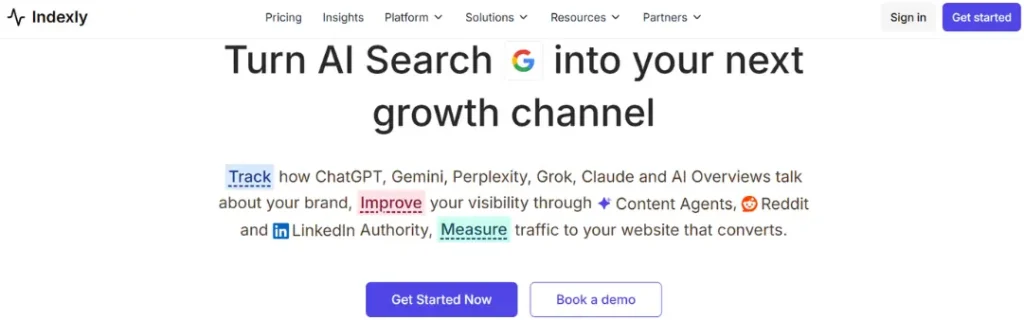
Key Features: Rapid indexing, AI visibility monitoring, crawler insights.
Pros: Speeds up how fast your content reaches AI engines.
Cons: Indexing focus means lighter visibility analytics.
Pricing: Starts at $99/month; no free plan or trial.
Best For: Publishers who need fast AI crawler discovery.
Zutrix
Zutrix offers real-time rank and AI visibility tracking with a sleek, modern dashboard.
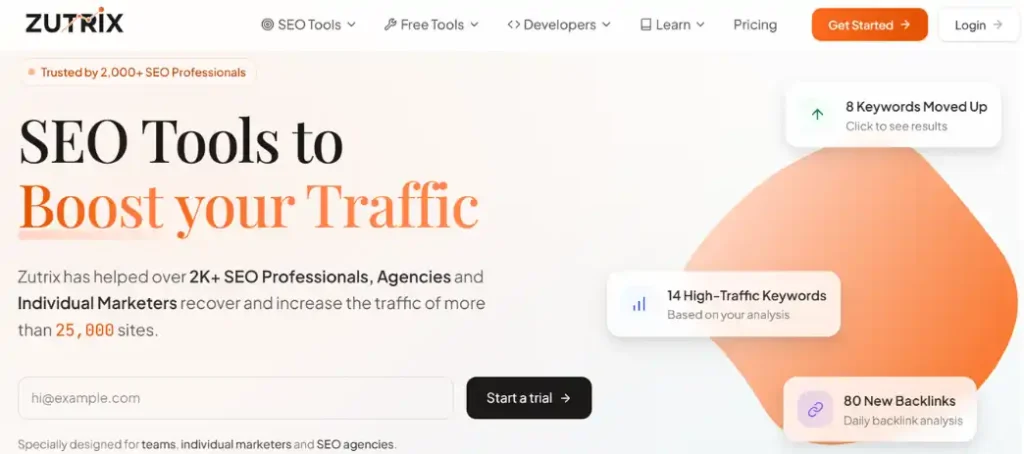
Key Features: Real-time tracking, AI + Google rank monitoring, notifications.
Pros: Fast, affordable, clean design.
Cons: AI features are still expanding.
Pricing: Starts at $19/month; 7-day free trial available, no free plan.
Best For: Teams wanting real-time AI visibility tracking on a budget.
CrowdReply
OranGEO is a focused generative engine optimization platform with strong GEO analytics.
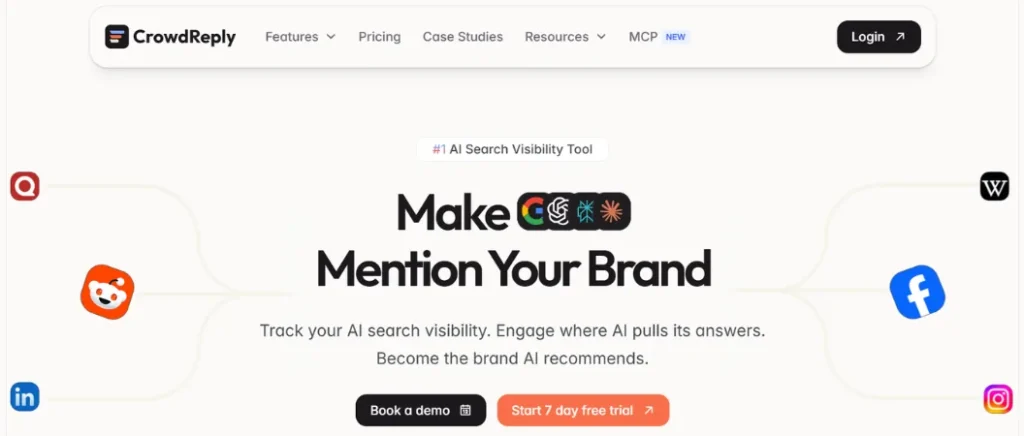
Key Features: AI mention seeding, community engagement, brand visibility building.
Pros: Proactive approach to getting cited by AI.
Cons: Less of a pure tracking tool.
Pricing: Starts at $99/month; 7-day free trial available, no free plan.
Best For: Brands wanting to build AI actively mentions.
OranGEO
OranGEO is a focused generative engine optimization platform with strong GEO analytics.
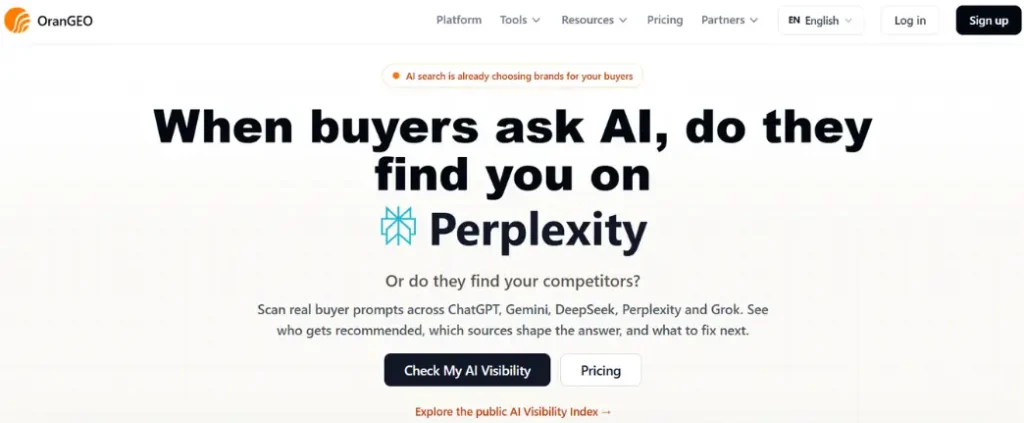
Key Features: GEO tracking, AI visibility data, optimization guidance.
Pros: Dedicated GEO focus, useful analytics.
Cons: Smaller international presence.
Pricing: Credits start at $7.99; no free plan or free trial.
Best For: Teams prioritizing generative engine optimization.
PromptWatch
PromptWatch monitors how AI engines respond to prompts related to your brand and industry.
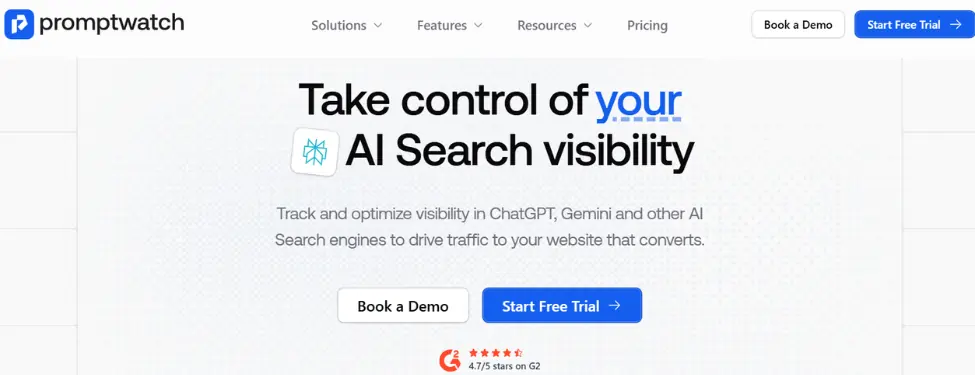
Key Features: Prompt monitoring, AI response tracking, change alerts.
Pros: Great for understanding AI answer behavior over time.
Cons: Niche focus on prompts.
Pricing: Starts at $95/month; 7-day free trial available, no free plan.
Best For: Marketers studying AI response patterns.
Omnia
Omnia is a unified AI visibility platform that pulls insights across multiple AI search engines into one view.
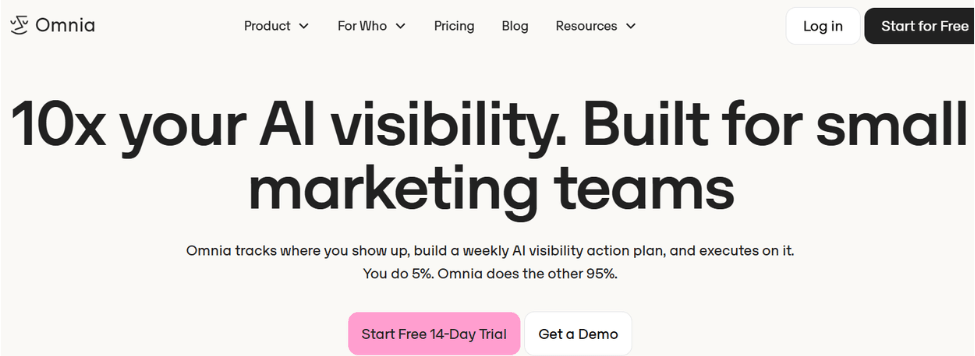
Key Features: Cross-platform AI visibility, competitor research, visibility score tracking.
Pros: Comprehensive AI monitoring, clean insights.
Cons: Broad scope can feel overwhelming at first.
Pricing: Starts at €79/month; 14-day free trial available, no free plan.
Best For: Teams wanting one dashboard for all AI platforms.
RankShift
RankShift focuses on tracking AI ranking shifts so you can spot when your visibility across AI search rises or drops.
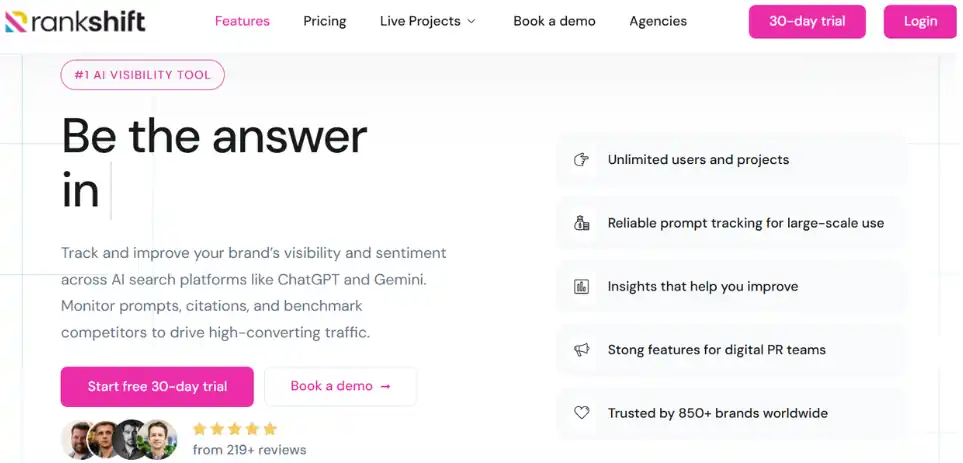
Key Features: Visibility trend data, AI ranking shift alerts, competitor tracking.
Pros: Excellent for trend analysis, proactive alerts.
Cons: Newer to the market.
Pricing: Starts at $85/month; 30-day free trial available, no free plan.
Best For: Teams monitoring visibility changes over time.
Mentionable
Mentionable zeroes in on AI citations, tracking exactly where and when your brand appears in AI answers.
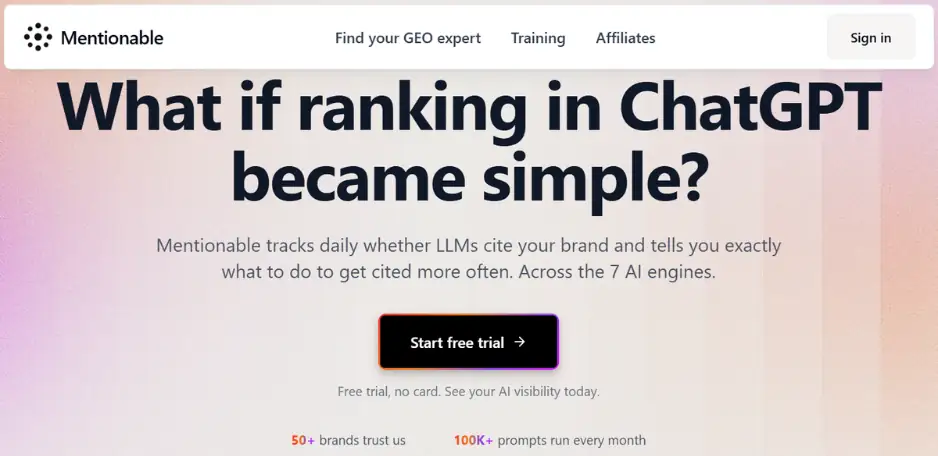
Key Features: AI citation tracking, mention analytics, brand monitoring.
Pros: Precise citation data, strong for B2B brand tracking.
Cons: Focused primarily on mentions.
Pricing: Starts at €79/month; 4-day free trial available, no free plan.
Best For: B2B teams tracking AI citations closely.
OmniSEO
OmniSEO blends full-funnel SEO with AI search optimization for a combined seo and AI approach.
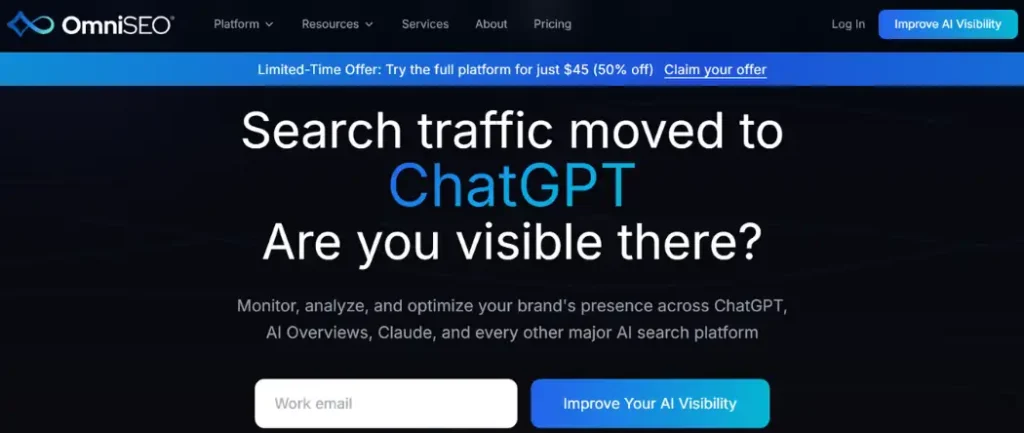
Key Features: AI + traditional SEO, content optimization tool, visibility tracking.
Pros: Unified strategy, good for holistic optimization.
Cons: Jack-of-all-trades rather than an AI specialist.
Pricing: Starts at $89/month; no free plan or trial.
Best For: Teams wanting SEO and AI in one platform.
SearchAtlas
SearchAtlas rounds out our list as a comprehensive AI visibility toolkit built for enterprise-grade AI SEO.
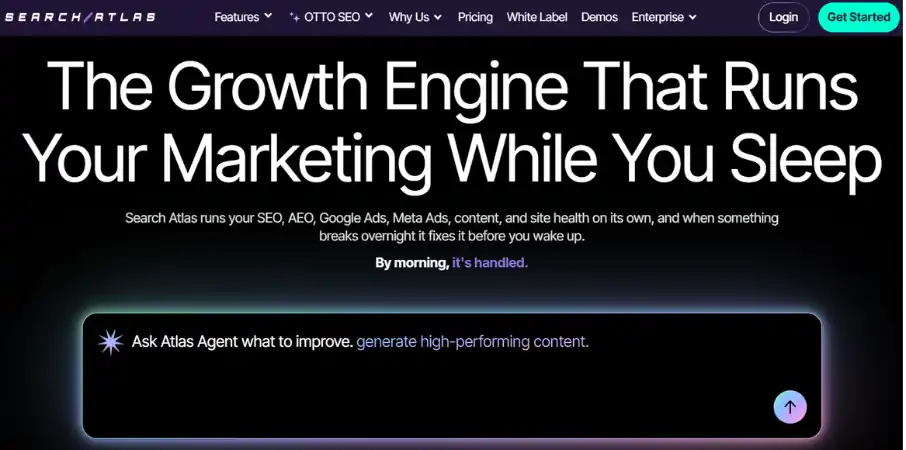
Key Features: Full AI visibility toolkit, content optimization, AI search monitoring, competitor research.
Pros: Feature-rich, powerful for large teams, strong AI SEO capabilities.
Cons: Can be complex for beginners.
Pricing: Starts at $99/month; 7-day free trial available, no free plan.
Best For: Agencies and enterprises wanting an all-in-one AI SEO platform.
How to Choose the Right AI Visibility Tool
With 20 great options, how do you choose the best AI visibility tool for your team? Here’s what to look for in an AI visibility platform.
Match the Tool to Your Business Size
Freelancers and SMBs should lean toward affordable, easy tools like Morningscore or Zutrix. Agencies and enterprises need comprehensive platforms like SearchAtlas or AirOps.
Check Engine Coverage
Make sure your chosen tool tracks the AI engines that matter to your audience; Google AI Overviews, Google AI Mode and Gemini, ChatGPT, Perplexity, and Copilot. Broad coverage means better AI visibility data.
Evaluate Reporting & Integrations
The best tools connect AI visibility data with your existing workflow. If you rely on tools like Semrush or other SEO tools, look for integrations that fit your stack.
Consider Pricing vs. ROI
Almost every option here offers a free trial. Use it. Test whether the visibility insights justify the cost before committing to a management tool.
How to Improve Brand Visibility in AI Search Engines
Tracking is step one. But the real question is: how do you improve brand visibility in AI search engines? Here’s a practical, step-by-step approach that works alongside any tool on this list.
- Audit your current AI presence. Use an AI visibility tracker to see where your brand appears in AI answers today. You can’t improve what you haven’t measured.
- Create genuinely helpful, authoritative content. AI engines cite sources they trust. Answer real questions clearly, back claims with data, and demonstrate expertise. This is the foundation of both AEO and GEO.
- Structure content for AI answers. Use clear headings, concise definitions, FAQ sections, and structured data. AI crawlers love content that’s easy to extract and cite.
- Build brand mentions and authority. The more your brand appears across trusted sites, reviews, and communities, the more likely AI models are to mention you. Tools like CrowdReply and Brand24 help here.
- Target the right prompts. Use prompt-tracking tools like PromptWatch and AIClicks to discover which questions matter in your niche, then create content that becomes the best answer.
- Monitor competitors. AI competitor research reveals what’s working for the brands that dominate AI answers—then you can do it better.
- Keep content fresh. AI engines favor up-to-date information. Regular updates signal relevance and keep your AI visibility strong.
- Track and iterate. Use your AI visibility monitoring tool to measure improvement, then double down on what’s working.
Follow these steps consistently, and you’ll steadily improve AI visibility and increase how often your brand appears in AI answers.
Final Verdict: Which AI Visibility Tool Should You Choose?
AI search isn’t slowing down; if anything, it’s accelerating. The brands that win over the next few years will be the ones that treat AI visibility as seriously as they’ve always treated Google rankings. Whether your brand appears in AI answers can make or break your discoverability. Here are our top picks by category:
- Best free option: HubSpot AEO Grader
- Best for agencies & enterprises: SearchAtlas
- Best all-in-one SEO + AI: SE Ranking
- Best budget pick: Morningscore
No matter which you choose, the most important step is to start tracking now. Every day you’re not measuring your AI presence is a day your competitors could be pulling ahead in AI answers.
Frequently Asked Questions (FAQ)
Are there free AI visibility tools?
Yes! HubSpot’s AEO Grader is completely free, and Seobility offers a free GEO tier. Nearly every paid tool on this list also offers a free trial, so you can test AI visibility tracking before you buy.
How do AI visibility tools track brand mentions?
AI visibility tools track brand mentions by querying major AI platforms with relevant prompts and analyzing the AI responses. They record whether your brand appears in AI answers, how it’s described, and how you compare to competitors; turning that into a visibility score and actionable insights.
Is AI visibility different from SEO?
Yes. Traditional SEO tracks rankings on search engine results pages. AI visibility tracks whether AI engines mention and cite your brand in generated answers. You need both: traditional seo tools for search rankings and AI visibility tools for AI search.
How often should I check my AI visibility?
For most teams, weekly monitoring works well. If you’re in a fast-moving industry or actively optimizing, daily or real-time tracking (offered by tools like Zutrix) helps you catch visibility shifts quickly.
Which AI engines should I monitor?
At a minimum, monitor Google AI Overviews, Google AI Mode, Gemini, ChatGPT, and Perplexity. These are the major AI platforms driving the most AI search traffic today. Add Copilot if it’s relevant to your audience.